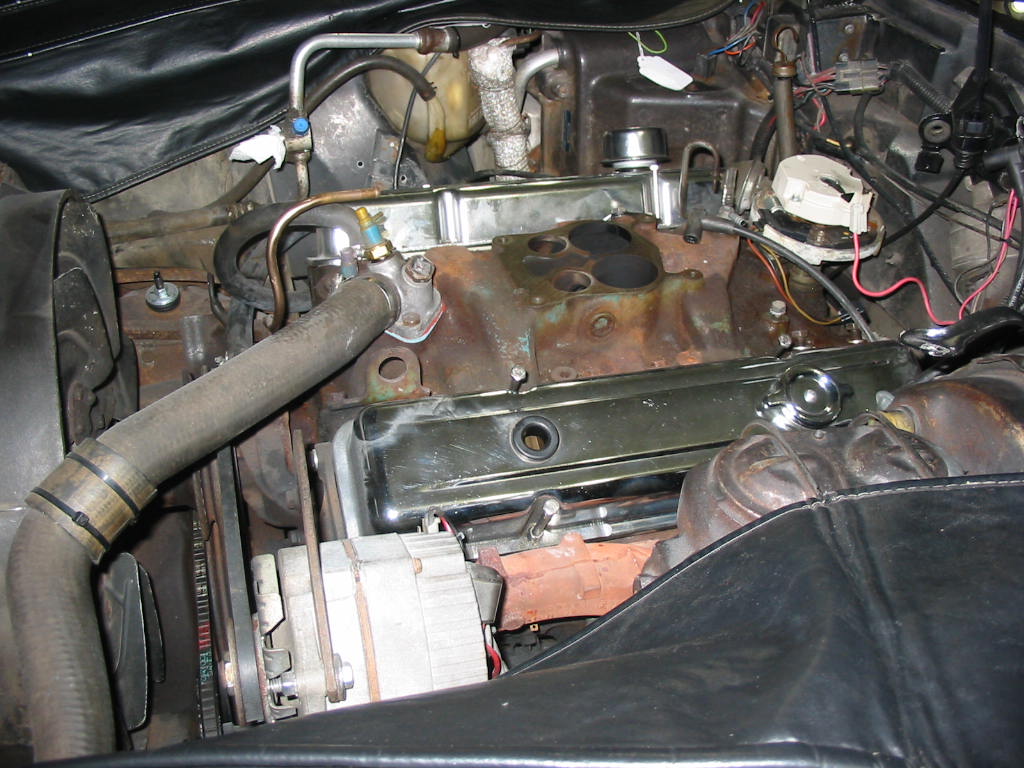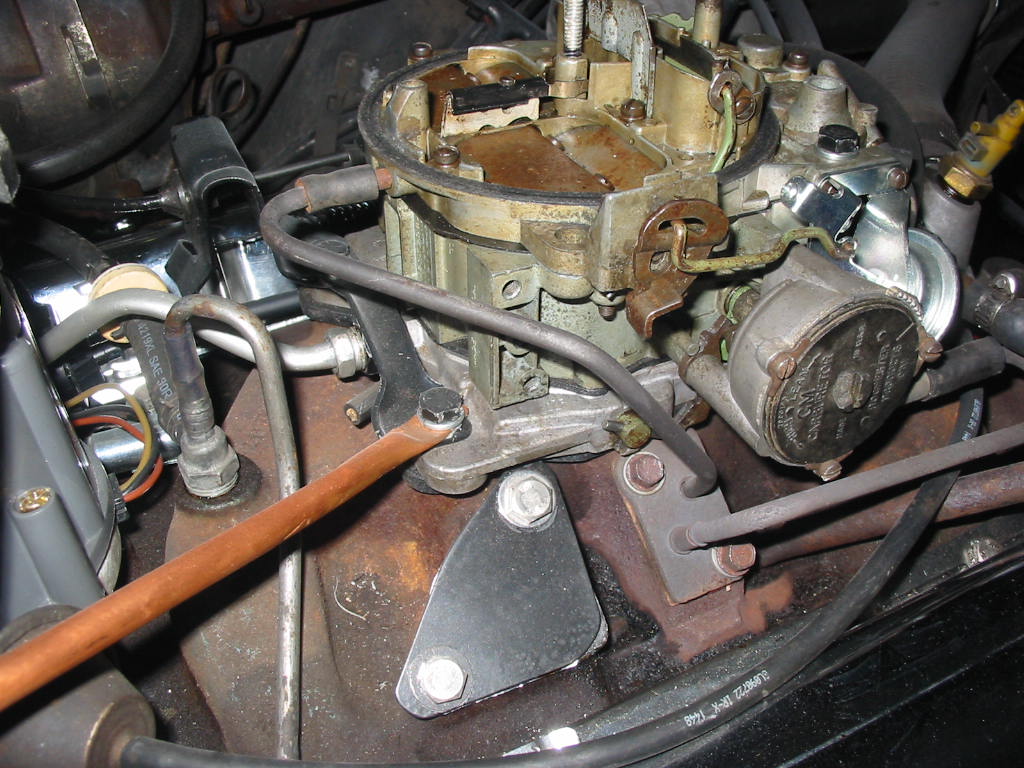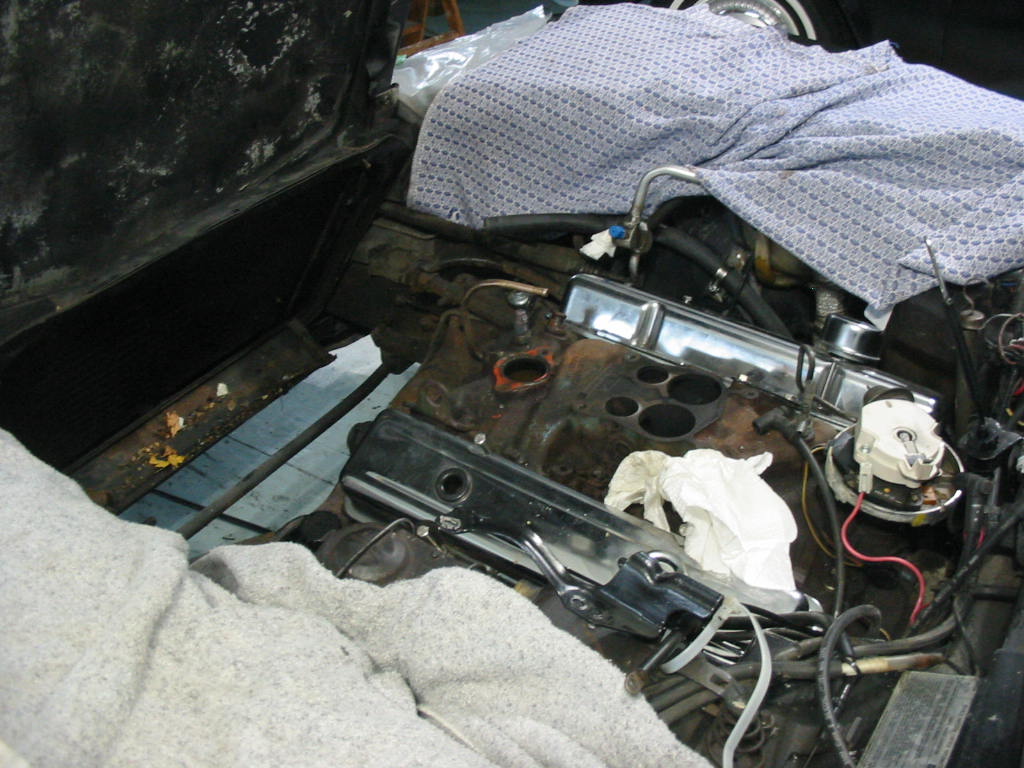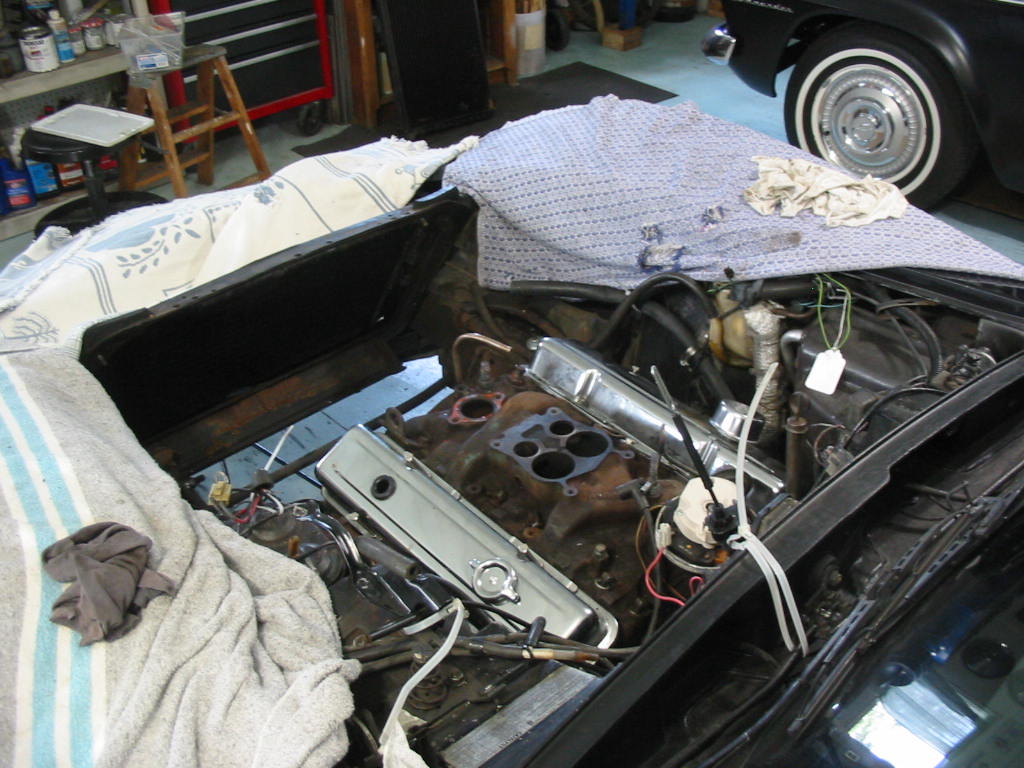
Seized valve lifters

I added enough oil to the engine to cover the oil pump intake – up to a bit over the add mark. Once again I used my drill to prime the filter and pump and get oil up to the rockers.

Oil came out of a number of the push rods and down onto the rocker arms.
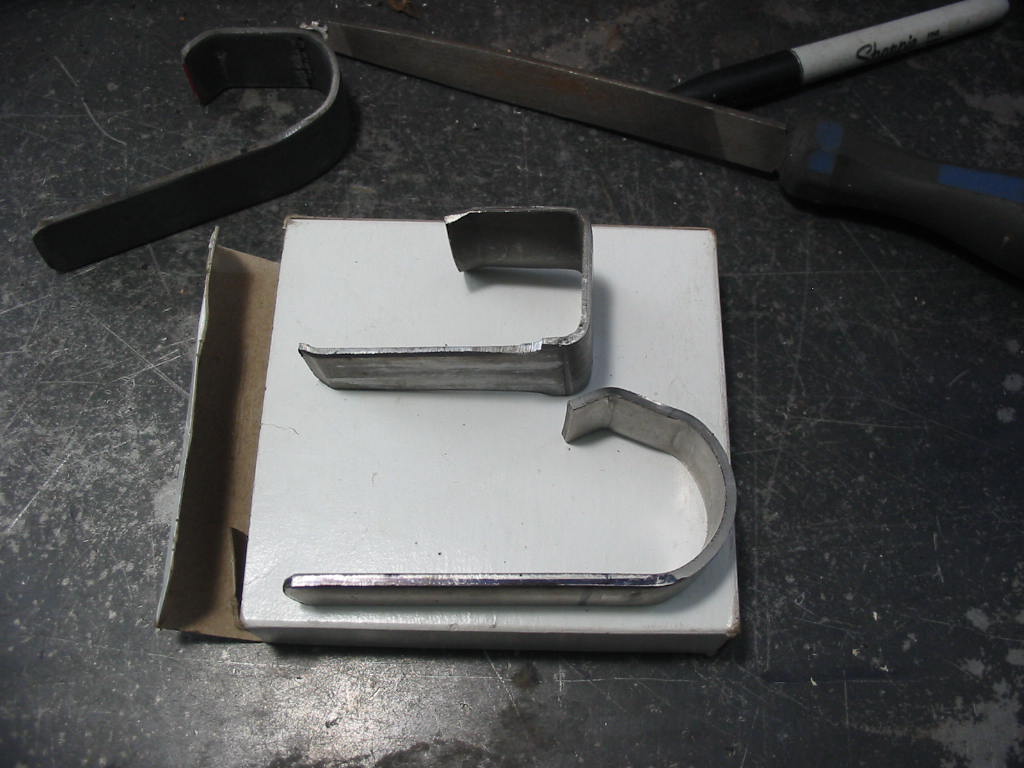
Some of the rockers remained dry even though I could see oil coming out of the lifters.

I pulled a lifter from one of the dry rockers and found that the plunger inside the lifter was frozen in place.

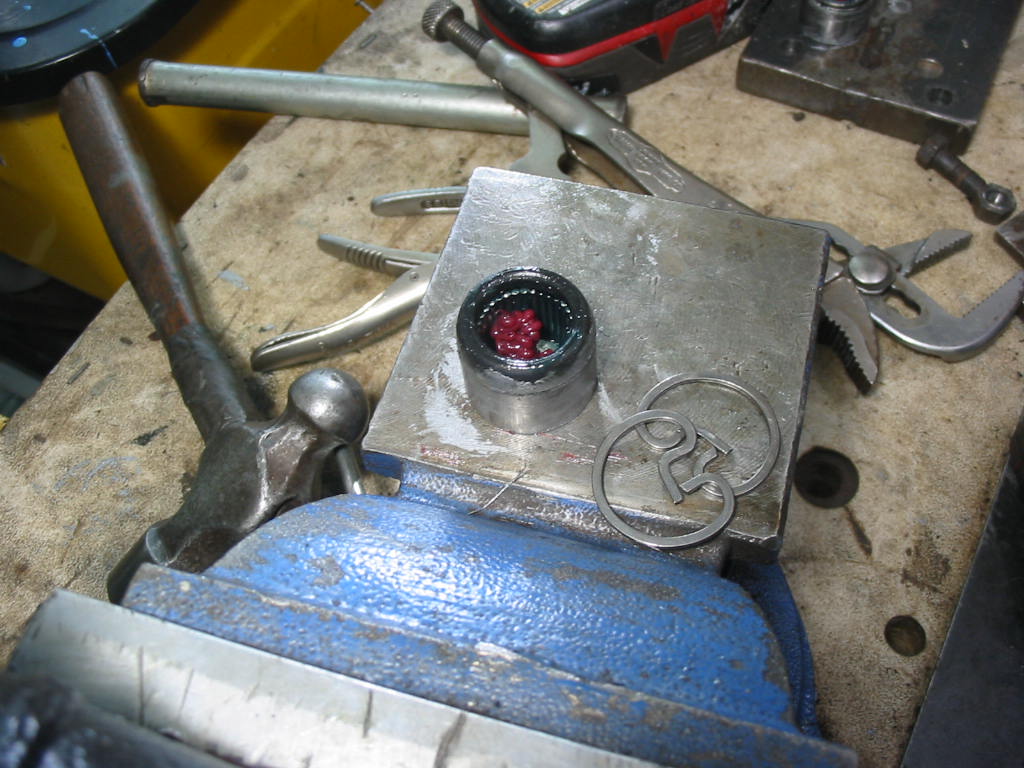
I immersed the lifter in reducer to see if I could loosen the buildup of varnish. No real luck there. So I heated the lifter with a heat gun and used a large bolt extractor to twist and wiggle the inner plunger free. I then put all the parts in parts solvent and blew them dry. Reassembly with a little oil worked fine

This particular lifter wasn’t pretty. Deep pits and worn concave. The lifter edge is riding on the cam. It should have enough miles left to serve my purpose. I coated the lifter face with STP which should stick and give lubrication until the engine gets oil pressure.

I decided to do all the lifters. Turns out they were all stuck to some degree. Some separate with just the tapered bolt and vice grips – I ground off the bolt a bit so it fits inside the inner plunger and pull it out on an angle. Most come out this way and some need to be heated to get them out. On reassembly I sand the inner plunger to remove the varnish and then a bit on the inside of the lifter to be sure they are moving freely. A cleaning, re-assembly, and a good dab of STP on the lifter face and they’re ready to go back in the engine.

I’m wondering now if the miss in the Chevy is simply a badly stuck lifter. A 3/4 turn on a stuck lifter would likely cause the valve to stay open a bit even when closed. I will be interesting to see if that is the issue.

Next: Putting on a new intake, carb and linkage

Block painting and then on to the top end.

Doing the final torque after the red sealant has had a time to firm up.

Got a response from Fel-Pro on why the gaskets weren’t fitting. Turns out these gaskets fit a ’79 350 (OS5197 C-5), but not an ’83 305 (OS30410-C). The blocks were changed a bit it seems. I had bought the gasket set to rebuild the original ’79 350 in the Chevy and that is why they don’t fit. I just assumed… Still hopefully it will seal OK for the short time I’ll need it.

All painted up with Tremclad metal rust satin black rust paint. It worked well on the motor in the Studebaker so hopefully it will here. Not sure if it will stand up around the exhaust ports, but we’ll see.

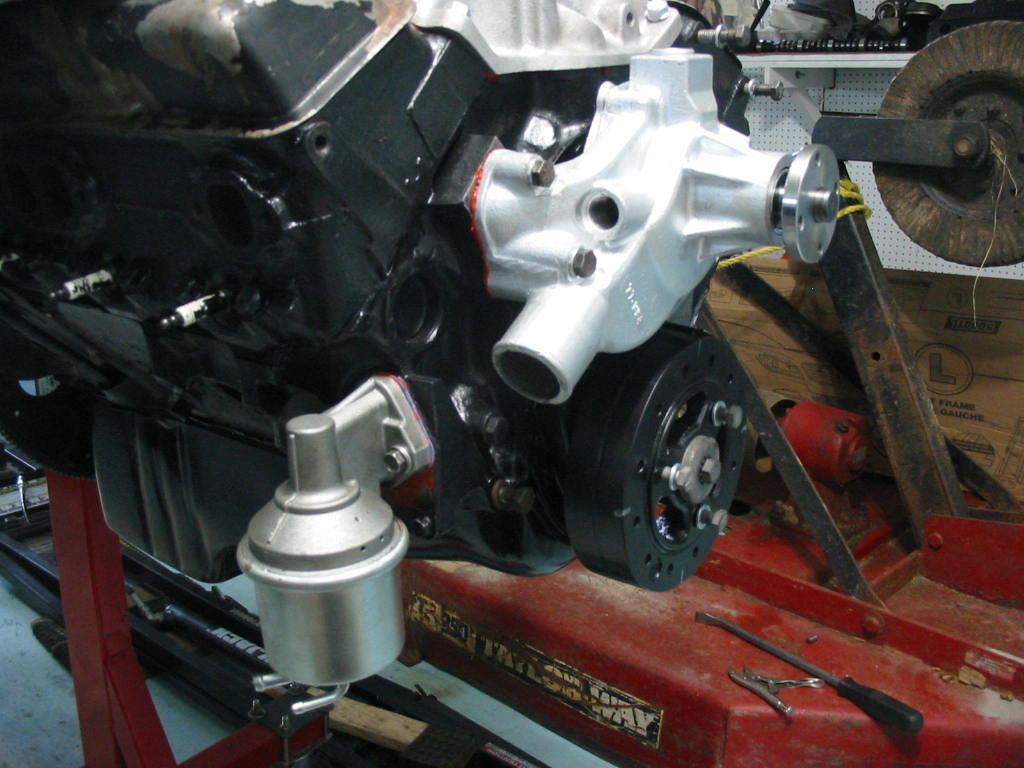
Time to fit the harmonic balancer back on. I’ve given the inside of the mounting surface a coat of oil and the outside where the seal will fit too. Also a bit on the lip of the seal in the cover to help the balancer slide past.

No need for spacers just the thrust bearing and washer that comes with the kit. Slipped in nice and smooth.

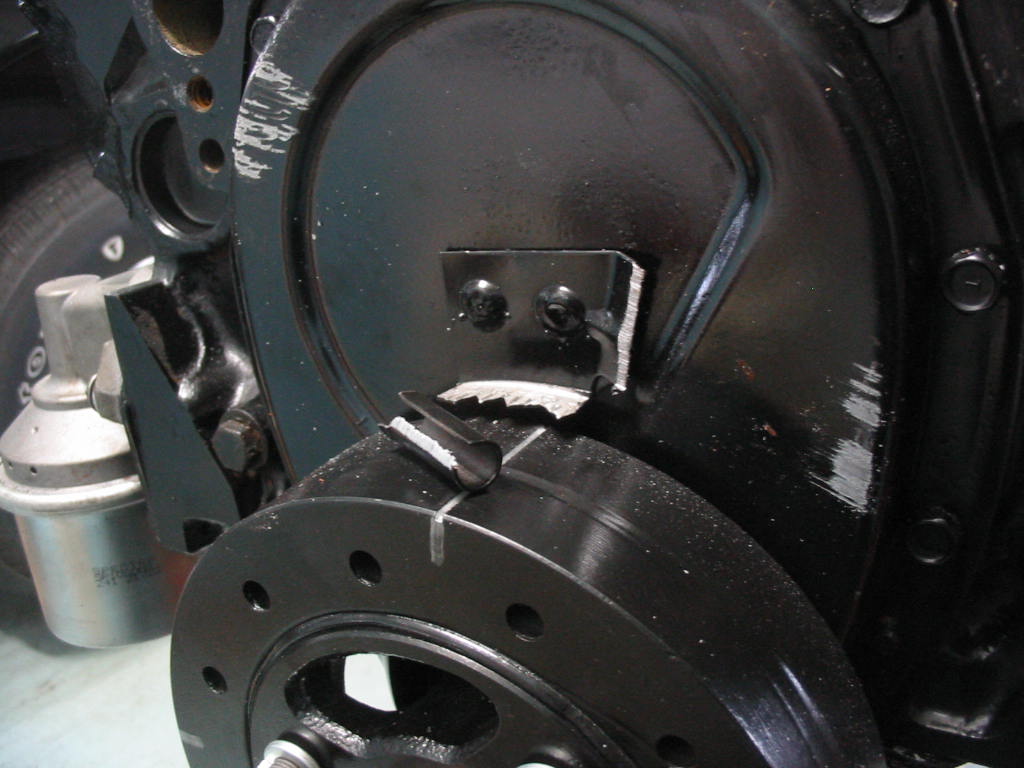
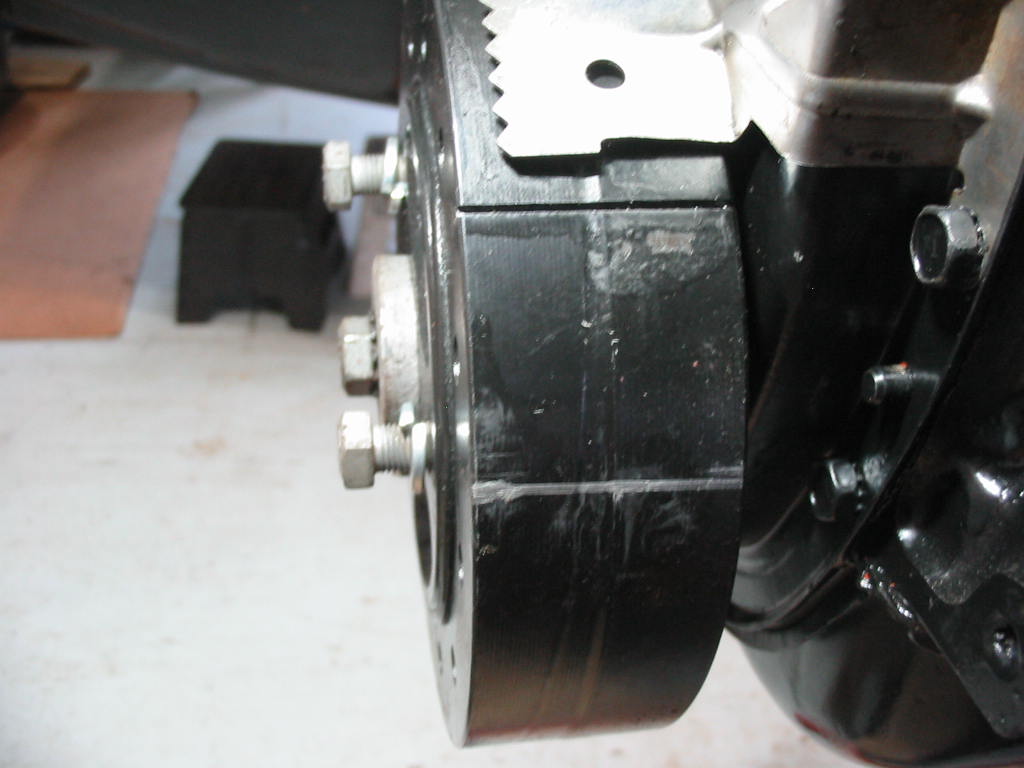
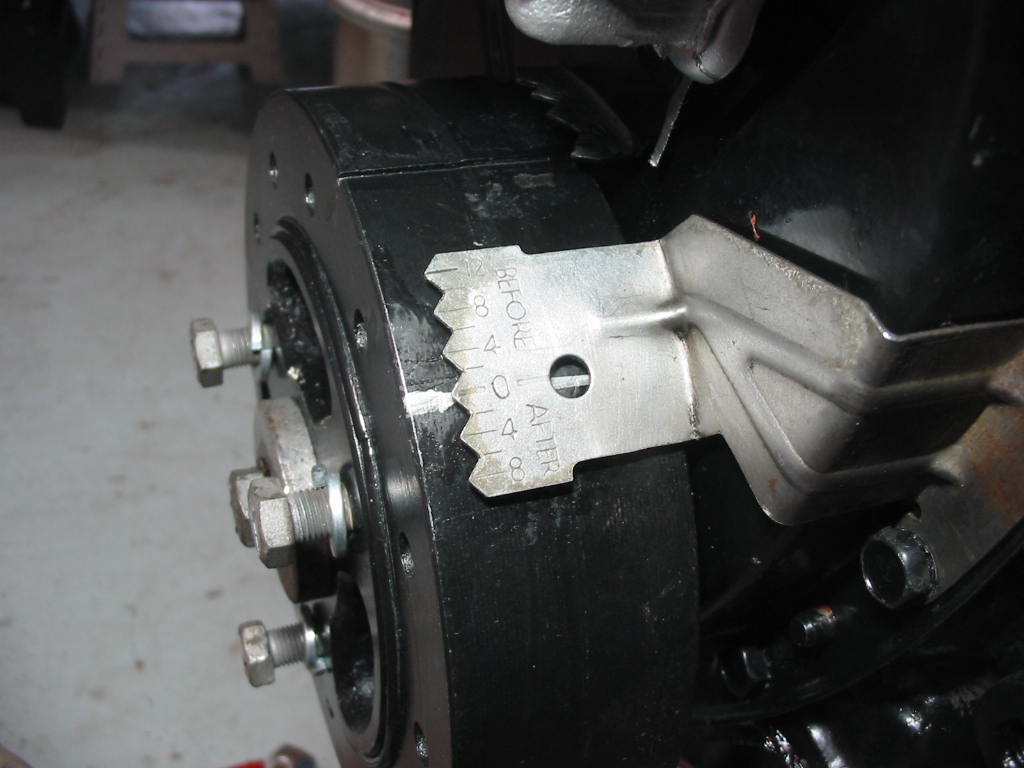
I painted the timing mark with silver paint to make it easier to see when setting the timing. I also outlined the timing tab on the timing cover.

I decided to pour some oil into the pan and spin the oil pump to be sure everything is getting oiled properly.

Next: the real reason why the rockers aren’t getting enough oil!

Closing up the bottom end.nest

New high volume Melling oil pump with a new pump shaft (metal collar) in place.

Problems in La-la land. The FelPro pan gasket kit isn’t fitting properly. The other gaskets in the kit fit OK, but these don’t. They’re not Chinese, they were made in Portugal. Both gaskets have the same problem at the rear of the block.

According to the label this is the correct set for a GM 305 (5.0L)

I’ve sent a ‘problem form’ to FelPro. I don’t want to take a chance ordering another kit and I don’t want to wait around for it to arrive. So I’ve cut away as needed and I’ll add a bead of red gasket maker to make up for the lost gasket. Shouldn’t be a problem as some folks just use red sealant alone and don’t bother with gaskets.

Sealant on both sides of the gasket and extra at the back to make up for the missing gasket coverage.

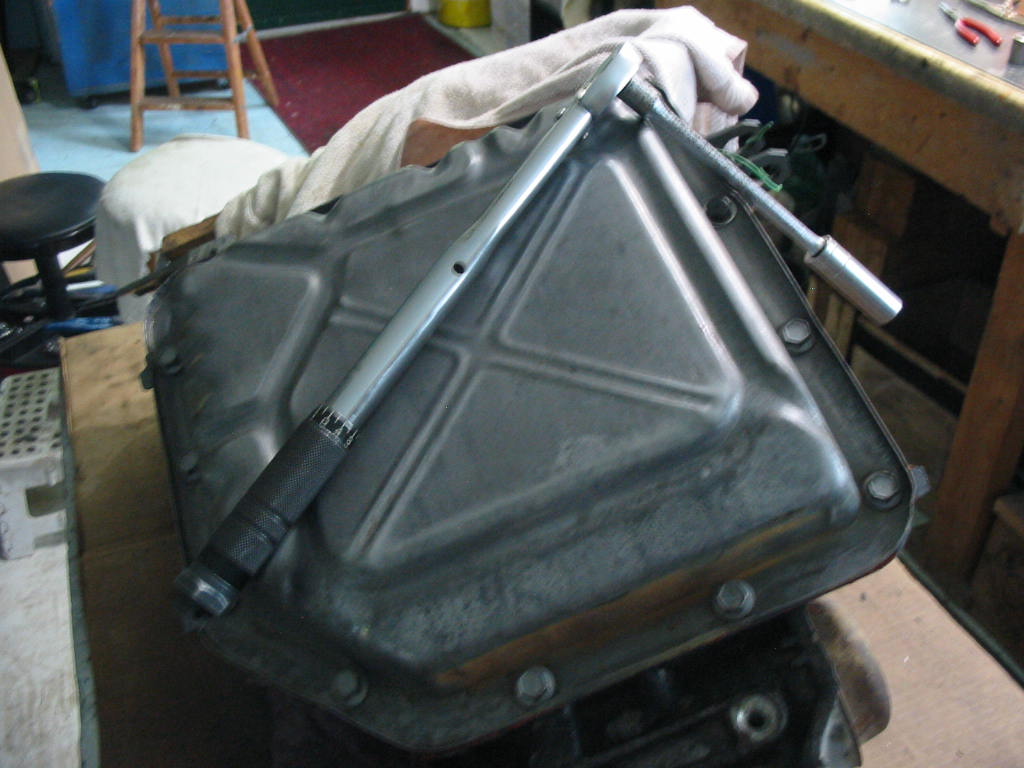
Pan in place. I have snugged down the pan bolts just enough to put a bit of a squeeze on the gaskets and gasket sealant. I’ll let it set overnight and then give the bolts a final torque. It calls for about 8-10 ft. lbs. which is a fair twist using one hand and a short wrench or 1/4″ drive.

Out of curiosity I opened up the old oil pump. there was significant wear on the cover as well as on the walls. So the engine wasn’t getting its proper pressure or volume which might explain why the rockers on one side and the timing gears seemed to be lacking proper lubrication.

Next up is block painting and then on to the top end.

Putting things together

Parts in – tool to put the harmonic balancer and lower timing gear in place, new oil pump shaft with a metal collar, a fail-safe 195 deg. thermostat, a set of plugs and a quadrajet base gasket.

I’m out of engine assembly lube so I gave the chain and sprockets a good coat of chain lube. It’s sticky and will provide lubrication when the engine is first started.

The sprockets and chain all need to go on at the same time. I needed a spacer on the installation tool reach over the crank snout so the lower sprocket can be pushed on. I previously set the crank so the lower sprocket timing mark was at the top.

All in place with the timing marks lined up. There is very little slack in the chain now.

I’m using a light coat of red gasket maker on the inside of the cover gasket – the smear of sealer is more even than appears in the photo.

The gasket fits over two lower pins and I have added two more at the upper end to keep it in place while I get the cover ready.

Another coat of sealant on the pan. I installed a new crank seal earlier that came with the timing cover gasket kit.

All ready except for the harmonic balancer. I’ll install that after the new oil pump and pan are in place.

Next: Closing up the bottom end.

Getting ready for paint, etc

Old oil pump. The plastic collar was split as was expected. I’ll order a new shaft with a metal collar.

Boring job of sanding the oil pan and timing cover. I don’t want to bead blast the pan as I’ll never get all the grit out from under the baffle. I sand by hand so I don’t make too much dust in the shop – it’s bad enough as it is trying to keep the dust off the cars! I think I’ll bead blast the timing cover as no grit can hide on the inside.

Just waiting for a warm day to get these parts painted. I have received the new timing chain and gears.

The old chain was definitely stretched. It would have caused the timing to be jumpy.

1/32″ (.030) hole drilled in the top oil gallery end plug. That should spray lots of oil onto the upper timing gear and keep the chain and lower gear well oiled.

Primed and two coats of satin black and the engine is gonna look real nice:-)

While I’m waiting for parts to put the donor engine together I decided to attack the steering wheel. It is one notch too far to the right. I need to take it off and set it one notch to the left which is off the factory setting. Seems that when it was aligned the steering wheel was not in the proper location. Not sure if this will move the steering box to its centre position or take is off slightly. Hopefully this won’t have a negative effect on the steering.

Replacing the horn contact parts can be a pain. This time I put in a couple of studs to line everything up. It made the install a whole lot easier:-)

Next: Putting things together

More disassembly

Intake off and looking at a lot of carbon in the gallery. The carbon is coming from the heat riser outlets. Over the years they have heated the oil on the underside of the outlets to the point of forming carbon bits. Must have done damage to the old oil pump I’m thinking.

Handy little tool I picked up years ago from Princess Auto. It’s a series of tubes that attach to the shop vac. The tubes can be added or removed so you can get the right size to get in tight spots. This is working great to remove the carbon from the lifter valley and also in the heads.

Scraping away bits of the old intake gasket from the heads using a razor blade paint scraper tool. Very little engine sludge in the heads or valley surprisingly.

Timing cover off and the timing gear also looks a bit oil starved.

From what I read a .030 hole drilled in the oil gallery plug at the top (above the two lower plugs) provides extra oil to the timing gear. I’ll do that. The high volume oil pump should handle that OK. I’ve used a high volume pump on a high mileage Chryco 360 and it increased oil pressure overall over 5 lbs.

I’ve scraped away all the old gasket and then sanded the timing cover seal surface and water pump mounts with 150 grit to remove any leftover gasket material or corrosion. The pan is still in place

Pan off and the internals look nice with high mileage wear showing. Not a problem as long as it will start well, run smooth and not smoke!

Ditto cleaning the old gasket from the block. The rear seal surface was a bit of problem, but dental scrapers helped get all the old rubber out.

Not too much crud in the pan, but there was some of that carbon in the bottom that was washed down from the lifter gallery.

A paint remover wheel is doing a fine job clearing out all the old gasket material from the pan and the timing cover.

Next: Getting ready for paint.

Engine block clean up

On to the boring job of scraping and washing away the accumulated crud from the block. I can’t get the block outside to use a pressure washer and I’m not sure that some of the water wouldn’t make it’s way into the engine.

I used an old paring knife and a razor scraper to get the main part of the grunge off and then using a toothbrush, parts solvent and rags, it cleaned up not too bad. I’m planning on painting the block, but before that I’ll have to go over it again with a small wire bush and parts solvent and then finally with paint thinner.

Ditto the opposite side. I’ll remove the ring gear and then do the back and then the front of the engine as well.

Valve covers off and a peek at the rockers. Fairly clean and oily on the right side.

Left side not so oily or clean. Lots of carbon. I’m thinking that after 100K+ miles the wear on the engine components is lowering the pressure and not enough oil is getting to the top of the engine.

I didn’t want to take the pan off, but best laid plans… I have a new high volume Melling oil pump that I bought for another engine. I’ll get that in and it should get more oil up to the rockers.

Next: More disassembly

Engine clean up, etc

A new screen for the case of the transducer solenoid. It draws air into the unit this way as needed.

The first paper gasket wasn’t thick enough to hold the solenoid cover firmly in place, One made from 1/8″ cork did the job nicely.

All painted up and ready to be stored for later installation 🙂

On to the exhaust manifold removal. One side came off with no problems. I used the impact wrench as I though it would shock the bolts loose better. My big concern was breaking a bolt off in the head. I really don’t want to remove the heads.

A stud on the other side didn’t want to come off. So I thought I’d cut off the head and then pull the manifold off. Once I did that I found that the stud was loose in the block, but stuck in the manifold.

I had to use two large chisels to get behind the manifold on either side of the stuck stud to force the manifold off. It took quite a bit of work to get it off as the stud was frozen tight onto the manifold.

Once the manifold was off the stud came out nicely. So both manifolds off without breaking any studs!

Good starter solenoid ruined! Starter came off OK, but between one thing and another the main solenoid contact post broke away. Still it’s a good running starter. The starter on the my Chevy is new so I shouldn’t need it, but I’ll clean it, check it out and keep it as a backup.

Next: Onto actual block cleaning.

305 Engine Prep 2

The cruise control system is totally mechanical. This part is the resume solenoid. I could have taken it apart, but it is a sealed unit and should be OK inside. I used my handy-dandy battery eliminator to test the solenoid and it clicked nicely and the vacuum could be detected going on and off.

I tested the main assembly with a drill and a stub end from a speedo cable. I was able to test the low speed cutoff switch this way. I tested the on switch (solenoid showing on the bottom of the unit) by grounding the unit and then putting 12 volts to the hold terminal on the top of the unit. All worked good. I used a bit of Jig-a-low lubricant on the solenoid shafts to make the solenoid shaft move smoothly without leaving a oily residue – the stuff is sold for lubricating vinyl windows.

Back to the motor. time to remove the front drive pulley and harmonic dampner. I used my impact wrench to get the crankshaft end nut and washer off – using hand tools is hard as you need to hold the engine from turning. I also used the air tool to get the pulley off and again to spin the puller to take off the harmonic dampner.

Lots of red sealant around the crank so I expect there was an oil leakage problem. I’ll be replacing the timing chain and sprockets and putting in a new crank seal in the cover at the same time.

Next: engine cleanup and exhaust manifold removal.

305 engine prep +

Draining the last of the old antifreeze – both sides. I hate working around antifreeze. It always seems to get spilled and it’s hard to cleanup and is sticky.

I’ll give the exhaust manifold bolts at least three soakings with penetrating oil before trying to get them off. I don’t want to have to take the heads off to get broken studs out. If they won’t come easily I’ll have to borrow or rent a torch set to help remove them.

Pretty well stripped out now. Friend Don will take it home to see if he can use the rear end.

I am tackling the cruise control transducer to see if it has any life left or is it all corroded inside.

First step is to bead blast the unit and get all the exterior corrosion off. Looks a whole lot better. Now to check the internals.

Happy day! The internals for the most part are excellent. I’ll need to take it all apart and clean off any corrosion. The circled part is the most corroded with a very tiny screw that is probably seized in the pot metal body.

Came apart fairly easily with only one screw breaking off. I cleaned up the contacts and started the re-assembly. The electric connector’s gasket on the top – right side in the photo – wouldn’t come off easily so I used a light coat of red gasket maker to do the job.

The cover on the bottom of the unit needed a replacement gasket which I made from a sheet of general purpose paper gasket I have on hand.

Next: 305 Engine Prep 2