This ‘n’ that

Ready for painting.

Hard to see the paint jobs, but I painted the driver’s door with the original Richelieu Blue metallic. Turned out OK with a couple of coats of paint and a couple of clear coat. I used acrylic enamel for both the paint and the clear. The passenger door is done in satin black as I also painted the new fenders and rockers.

The car is now ready to get on the road as soon as the salt is washed away:-)

Meanwhile my buddy Don is working on his ’57 Studebaker project car. Nice job of patching the inside of the fender.

Less patching needed on the passenger side fender.

There are always hitches in these projects. This is the heavy duty 3 spd auto with overdrive that is attached to the 350 LS Don is planning on putting in the Stude. You can’t see it but at least three of the mounting ears are cracked! It is a one piece case so to repair will mean finding another trans and swapping out the internals. Not an easy job to find a donor and do the swap. Happily Don has a 700R4 three speed OD trans from a Firebird that he recently bought, stripped and junked. This might be better as the 700R4 is smaller than the HD trans now on the engine and it will be easier to fit in the Stude.

Next: waiting on a donor 350 for the ’79 Chevy

Spot putty filling

Bondo brand Spot putty applied over the sanded tiger hair fibreglass patches.

First coat of spot putty sanded off and more added to fill spots missed. I decided to do a bit more on the passenger door just to see how smooth I could get it. I sanded the tiger hair with 80 grit paper. I’m sanding the putty with 320 grit. Hopefully that will be good enough for a smooth paint finish.

Original front bumper back on the car. I think I like it better. More classic looking than street rod.

Next: spring is here and I need to finish the Studie and get it on the road for it’s spring shake down run 🙂

Door progress and ’57 update

Left front door finished and back on the car. It went a lot faster and easier with lessons learned from the other front door!

Both door sides need the trim holes filled and there is a small dent on the left door needing attention. I have sanded it down and then coated the bare metal with Rust Converter to be sure any rust left over is turned to primer.

I opted for this setup rather then using the grinder and a flapper wheel. A lot less noise and flying dust this way. With a smaller wheel it worked better for the smaller grinding needed.

Ford rims and temporary tires on the ’57 Studebaker project.

The engine has been moved out of storage and soon will be positioned in the car so that new motor mount pads can be fabricated.

In between some small rusted out areas on the fenders need to be fixed. Same problems with front fender rusting that all early cars without inner fenders suffered.

Next: Finish door repairs and put the front bumper back on and see if I like it better with a bumper than without.

More door work and a street rod project.

Starting work on the passenger side front door. It should go easier with lessons learned from the first door.

The regulator was pretty stiff so I decided to get it on the bench were I could get at all its ‘joints’.

Likewise the door latch.

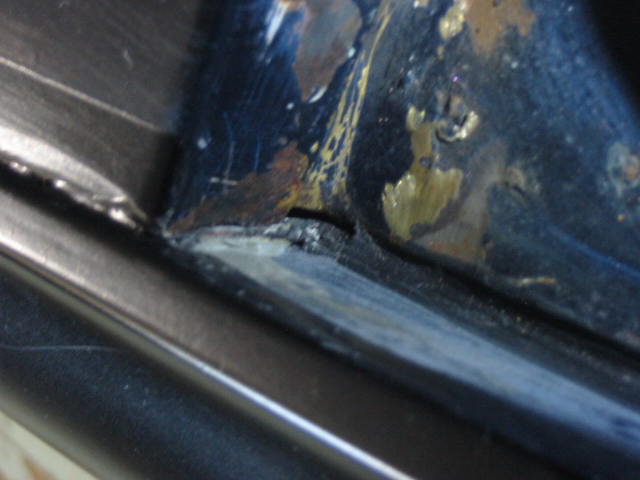
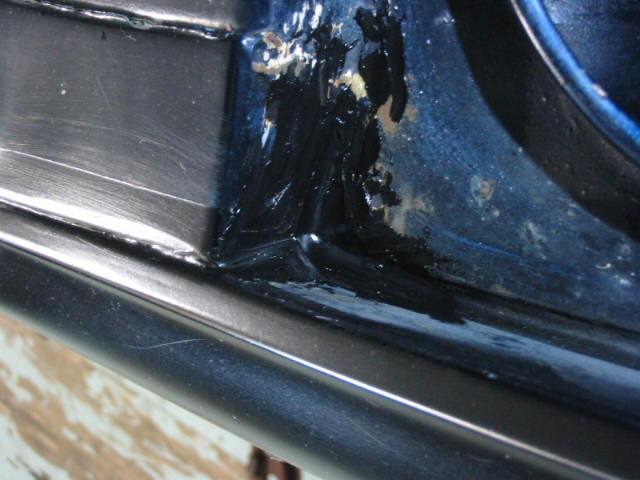
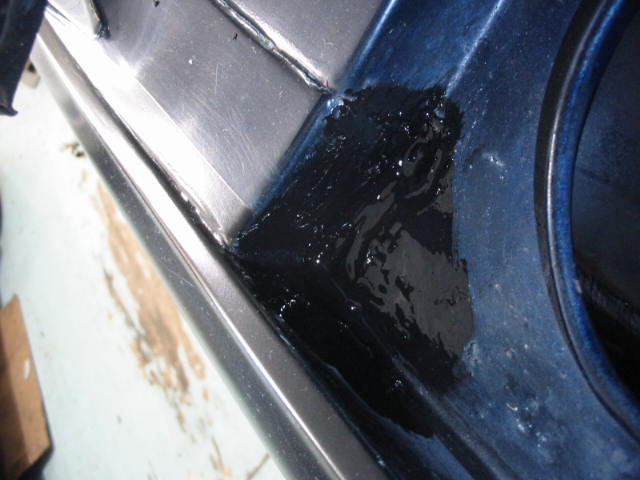
Old seal glue removed, rusted areas sanded and taped off ready for paint.

Back to the drivers door. Seal and door panel in place.

To seat the new seal which is making closing the door stiff, I moved the door striker out a tad so it was easier to close. I will leave the seal to take a set for a couple of days then over a few more days, move the striker back in bit-by-bit until the door is closing properly.

This is a shot of a friends ’57 Studebaker Champion that he is doing over into a nice classic driver. He has adapted an original Mustang II front end to the body at this point.

He has upgraded the front end with 11″ brakes and has overhauled the power rack. The original frame fronts are back in place to fit the original front end components. He has also replaced all ball joints, springs and bushings.

This is a late model LS 350 Chev engine and overdrive trans from a 3/4 ton truck van that he plans to install. It will also include air conditioning.

I’ll post his progress from time to time.

One step back!

Paint went on fine, but then the fish-eyes appeared. There is grease on the door latch mechanism and I must have spread it around when I was wiping down with paint thinner.

Not too big a job sanding it down and cleaning it with thinners.

Meanwhile I’m getting other work done in preparation for re-assembly. All cat whiskers now riveted and ready to be installed once I finish going over the doors.

Second go and I got a good result. Three coats of blue and two coats of clear coat.

Door complete except for the seal which I will put on when the door is installed. I want to leave the paint for a few days to cure well before gluing on the seal.

Next: The other door and filling the trim holes in both doors.

Door windlace, etc

Painting the area that will be under the new door seal. The blue plastic tape is good for getting a nice clean line.

The old windlace has a wider and stiffer attaching band.

To make up for the floppy attaching band I’m using the old windlace rubber as a filler. I have cut off the old windlace at the door top and will leave it in place. To do a proper job and replace that part of the windlace the headliner has to be removed and that means a new headliner. That may happen, but down the road and I’ll buy all new windlace at that time.

The choice of windlace colours is limited. I chose the light blue. I should have bought a darker tone. But it is a whole lot nicer than the old stuff. And as I said I’ll buy new stuff when I replace the headliner. Also, not only do you need to replace the headliner to do a proper job on the windlace, you also have to remove the dash to get at the hidden windlace clips!!! I have managed to get the windlace to stay behind the dash, but it would have been nice to have it attached in that location.

My test paint. I wanted to use a primer that can go over rust, but I wasn’t sure that it could stand the harsh solvents used in spray bombs. I put down a coat of Rustoleum filler primer. The label didn’t say not to use cover paint with strong solvents ( Tremclad paint, also made by Rustoleum, does warn against using cover paints with strong solvents). I left it for a day and then gave it a coat of Richelieu blue automotive acrylic enamel. After a day it still hadn’t acted upon the primer so it’s a go 🙂

Next: painting the door edges.

’66 Stude door work

While I’m waiting for the used engine to rebuild for the Chevy I’m going to get some work done on the ’66 Studebaker Commander.

I need to go over all the doors eventually, but for now just the drivers door. I’ll be removing the ’66 lower door trim in favour of the wider ’63 trim that goes along the upper side lining up with the door handles.

Door off and the vent and door window removed.

I scraped away the sound deadner, cleaned and sanded around the five lower trim holes. I then applied a fibreglass patch with two coats of fibreglass resin. I will cover them with black automotive coating later. On the outside I’ll fill the holes with two part body filler with short tiger hair. I’ll then skim that with regular body filler for the final treatment.

There was no way I could get the attaching clips fitted into the new cat wiskers for the outside of the door. I did find a way to pop rivet the old clips to the strip.

I broke off the mounting tabs and drilled them for a 1/8″ pop rivet. I then drilled the cat wisker in the proper locations and attached each clip. Worked a charm 🙂

Next I removed the old door seal. I wanted to remove all the old glue so that the new adhesive would have bare paint to stick to. The best solution after trying some other stuff was plain house paint thinner and small chunks of course scrubbing pads. I will also clean and sand all the exposed metal for a later coat of new paint.

Next : painting and re-assembly.

Speakers

The nice new speakers refused to fit in the dash opening on the passenger side. The magnet is so big that it hits the bracket for the glove compartment lock. Bummer!

I bought them from Corvette Depot. So I went online and filled out the return form. I then was able to print off a return UPS label. Once I got the return approval email I boxed them up, ready for shipping. The company make it really easy to make returns.

I was going to buy another set of speakers from Corvette Depot, but the only other set that was supposed to fit the ’79 models was out of stock until maybe sometime in May. I was at Canadian Tire picking up some specials and I found a set of 4X6 Pioneer speakers. They looked like they might fit so I picked them up.

They fit just fine on the passenger side.

The speakers came with leads. Here I have soldered them to the original socket from the old speaker on the driver’s side. The leads are marked as + and – using different blade connectors. The Chevy service manual shows the tan lead as being the + side so I made sure the + lead wire was connected to the correct side of the plug.

The old speaker on the passenger side was a replacement and was hard wired in. The + side on the passenger side is the dark blue wire. Using bullet connectors I soldered ends on the leads and the original speaker wires – they are shown on the photo of the glove box opening above.

The installation bracket with the speakers fit the dash openings OK so easy to get the screws in – it was harder with the forward screws as there wasn’t enough room under the windshield to use a 1/4″ ratchet. I started them with fingers and tightened with a 9/32″ box end from a mini wrench set.

They sound great – especially using the cassette tapes. So now I’m really ready for cruising in the Chevy 🙂

Next: I’ll be working on Studebaker doors until I get the used replacement engine for the Chevy.

Tidying up

Just a few things to get done and the Chevy will be ready for spring.

Earlier in the winter I overhauled the power steering which meant I fiddled with the left and right tie rods. The caster and camber should be OK, but the toe needs to be checked.

The rear wheels are about 3/8″ wider than the front. So I made up a small block of wood 3/16″ thick and tucked it behind the string on the front of the tire on the high spot – missing the raised lettering. By rights the string should be 3/16″ away from the back of the front tire with the wheels in the straight-ahead position. As it turns out the right front string was just touching the tire so I has at least 3/16″ toe in on that side. The left string was about 2/16″ away from the tire so I had about 1/16″ toe. I adjusted the left tire tie rod until I got the same 2/16″ on the right tire. I ended up with a total of approximately 2\16″ toe in. The manual calls for 2 to7/16″ toe in so all should be good. Some time ago I mechanics teacher told me that the new tires tend to run straight so little if any toe is needed.

Time for a grease job. I didn’t do the greasing when I overhauled the power steering. There are a number of grease fittings on the linkage and PS control valve. Unfortunately the car has its original u-joints and so no fittings to add grease. After 45 years the grease must be quite dried out so I expect that will be a job to be done in the near future.

I picked up a set of anti-theft wheel studs for aluminum wheels from Zip Corvette. Should give some peace of mind if I have to leave it parked overnight.

Wheels back on and nuts torqued to 90 ft lbs with anti-theft nuts. All ready for the road 🙂

I’ll leave it on the Quick Jack to keep the car off the wheels for the next two months. Also it will make it easier to work on the dash.

Couple of arrivals from Corvette Depot. Some hood bumpers and a set of replacement front speakers. I’ll have to time to get them in before spring,

Next: getting the speakers in and taking a door off the Studebaker.

Escutcheon install

The door panel is pre-cut to take the remote adjuster for the sport mirror. The backing cloth and sponge needed to be removed before the inside vinyl is cut.

I then placed a piece of wood under the vinyl to keep it up against the hole and made the two diagonal cuts.

I pushed the escutcheon through from the inside (it has two prongs which just fit in the panel hole. The backing plate is then installed with two screw to secure the escutcheon to the door panel

The remote toggle switch mechanism is held in the escutcheon with an allen screw. Should be fun getting that together when fitting the door panel to the door!

Hard to see, but the remote mirror mechanism was damaged when last installed or removed. The threaded hole for the set screw is broken out on the front side.

The set screw will still fit and hold some, but it needs extra support. So I drilled and tapped another hole to add a second set screw. This one will just push against the remote mechanism and help keep it in place.

Remote mirror escutcheon in place and the door panel also.

Doors done 🙂

The engine in the Chevy is worn out. There are two cylinders with low compression and the timing chain is stretched. So it will need to be overhauled. I’d rather have an engine ready to install than take the time to remove and rebuild the existing engine. A Studebaker friend who also likes other brands has an engine from a late ’80s Chev truck that may be available to me. It is a black replacement engine. He has removed a head and the upper block looks good – clean and no sludge buildup. Also the cylinder wear appears minimal – in fact some the original cross hatching can still be seen. Next will be a check of the bottom end. If it looks OK as is or is rebuildable it will be a go for the Chevy.

Next, just some finishing touches and the Chevy will be ready for the driving season. With the engine as it is I’ll be keeping close to home – at least close enough for my CAA plan to get the car flatbedded home should the motor give out.