Snow week delay.

We had a 3′ dump of snow in our area. That put everything on hold in the hobby department. for a whole week.

Finally got back to the windshield work. Here I have run a strip of the buytl seal all around the windshield. I went over it to press it onto the frame using a strip of the backing tape. Goes on easy and sticks to anything it touches!

If things can go wrong they will! I made marks on the windshield and the body (circle) to allow me to get the windshield back in the same place. Unfortunately the windshield caught the buytl seal just as we were aligning the marks and it moved to the left by about 1/16″. On top of that it seems that the glass was misaligned at the windshield shop also in the same direction. So in the end the glass is about 1/8″ over to the right side. This won’t be a big problem unless the side trim won’t rest over the glass.

Happily the right side trim did just fit over the glass so all is good.

While I had the windshield out I removed and replaced the two speakers so that I could get them out more easily later on. I wish now I had picked up a couple of speakers as it would have been so easy to install them with the windshield out.

Next: finishing up the windshield install and then it’s back to the doors.

Windshield and trim

Last task before replacing the windshield is installing the trim clips across the top. I’ve added four extra clips in the centre section. There was only two clips at each end for some reason.

Ready to remove the old sealant from the windshield. I used a razor blade tool and it came off quite easily.

There are a few spots where the black paint came off as well. This will be painted back with semi-gloss paint.

Once the paint is dry I can do the install. The silver marks on the lower section will be used to line up the windshield before setting it down on the buytl sealant.

Meanwhile more work to get old sealant off the windshield trim and then put it through the buffer for a nice shine 🙂

Next: Windshield install – finally!

I decided to remove the header strip so that it would be easier to clean and to apply the sealant along the inside of the front edge where it slips over the windshield frame.

Unfortunately the rivet holes in the fibreglass got enlarged when I drilled out the rivet. Fortunately there is a metal strip under the fibreglass that I could use to install machine screws. I did have to make up a die to dimple the header strip so that the machine screw wouldn’t be too raised for the roof panel seal. I cut the bolts just long enough to fit. The inside panel under the header does not have much room to squeeze in a machine nut. However it turned out to be OK.

Hard to see, but I ran the header panel over my buffing wheel with green stainless grit. It came up quite nice. After this I applied black automotive sealant to the roof at the back where the header panel will be bolted and along the underside of the front lip of the panel.

I fit the header panel to the back and snugged the two machine screws. I then snapped the panel over the front lip of the windshield frame and over the two corner mouldings that I had installed earlier. The mid and two back interior covers are in place. I will now put back the front windshield inner covers.

Next: time to put the windshield back on the car.

Windshield Prep.

Primed and painted with Tremclad metal primer rust paint and then a coat of semi-gloss Tremclad. I’ll leave it a few days to cure before installing the windshield. Lots to do to get ready beforehand.

New window outer trim to replace the old units. I couldn’t get the old units to snap in place. The attaching nubs were a bit rusted, but the rubber seals were still fine.

New seals in place. A bit of a job getting them to snap in place. And then I realized I had to remove them to get the window back in !!!

Next: getting the header back on.

Windsdhield prep

More to clean at the bottom of the windshield.

Especially under the fender lip on the passenger side.

This type of cleaning wheel does a nice job getting the old sealant and surface rust off in more open areas.

Fiberglas mat epoxied in place.

The windshield seal will run right over two body seams – one on either side. I filled them with two part body filler (short tiger hair) that is water proof.

Body filler applied and I’ll sand with 40 grit when hard.

The following day I sanded the three spot to where I have a nice smooth run for the windshield seal. I have a seal coming from Corvette Depot.

Next: Extra trim clips and clean up.

Windshield success

I tried various handles for the cutting wire. This worked best. The red wire cover is a spray can pipe it worked keeping the cutting wire off the dash on the inside. Also, it took awhile for me to get the hang of it all, but finally I used short pulls with just a little pressure on the wire. Some spots were tough where the seal was thicker especially going around the bottom corner on the left side.

I made up wooden wedges from shingle stock and pushed them in the cut as I went around. When I finished up around the top left corner the windshield was complete loose 🙂

with a couple of window suction cups and help from K it was easily removed and put aside for later cleanup.

Starting the cleanup of the top sections.

Lots of crud, old sealant and rust to remove.

A fair amount of rust pitting, but I don’t think that will be a problem with paint and a new gasket/seal in place.

Only one nasty hole on the bottom right. Not enough to affect the strength too much, but will need to be repaired.

I used a dremel tool with a fine pointed bit to clean the hole out to good metal.

By rights a small patch should be welded in place. My welding skills are not nearly good enough for even this small job. I only weld something maybe every six months. If I was at it daily then I might be good enough.

Fortunately I was able to get a piece of steel behind the opening which I held in place with recessed rivets.

Fibreglass matting has been pushed in behind the edges of the hole.

Next: Fiberglassing and final fill of the frame hole and more Cleaning.

This and that

A small order in from Corvette Depot. A decal to cover the carb heater access hole, some specialty clips used in the door linkages – I don’t need them right now, but good to have on hand to save waiting if one gives out, some door access plugs and a length of cutting wire for windshield removal.

I’ve made my way up the passenger side of the window and along the top. I have been using a utility knife to cut the bead on the ouyside and on the inside along the edge of the window frame. I’ve been pushing in small wooden wedges as I go along to help keep the seal from re-attaching itself. I don’t know if I caused the chip or the chip was already there, but it is a cause of concern (red circle). I will stop the freeing of the windshield until I get the drivers door finished – I need to have the drivers side door-to-windshield upright in place to fit the door window.

This is an epoxy bonding kit I picked up from Princess Auto some time ago. Very handy for fixing cracked plastic, etc. The left side of the device holds the epoxy and the right side is a UV light to harden the epoxy. I’ve put a dab on the chip and hopefully it will stop and cracking.

I have found a way to easily paint the seat springs. A foam brush works very well so I did all the springs on the bucket seats for the Studebaker.

All painted and assembled with the reclining mechanism in place. Now to get the upholstery shop and see if and when I can get them done.

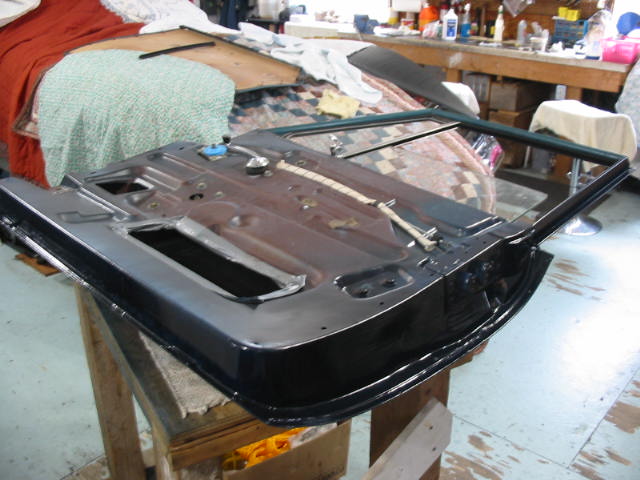
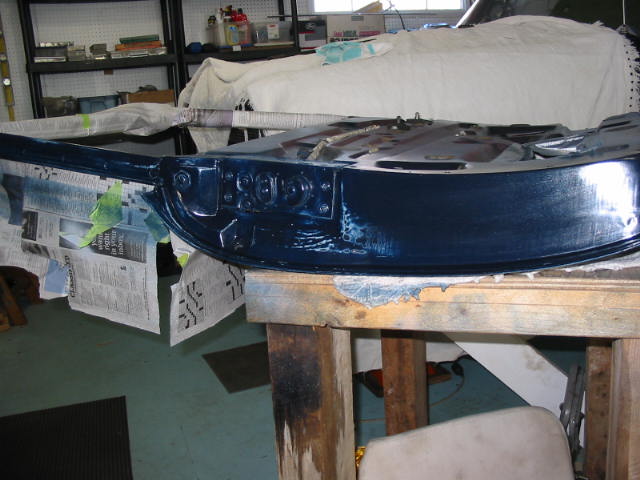
Back to the door repair. I put on a couple of coats of Tremclad gloss black and after two days I wet sanded it until it was smooth. Now I will add another couple of coats of paint and hopefully after a couple of days I can wet sand and polish.

I have already covered the hole in the snorkel with black pinstripe tape.

Looks much nicer with a Chevy decal over the hole.

I need to remove the wipers to complete the windshield work so a good time to give them a bit of an overhaul.

Next: hoping for parts to arrive from Zip Corvette.

Watching paint dry!

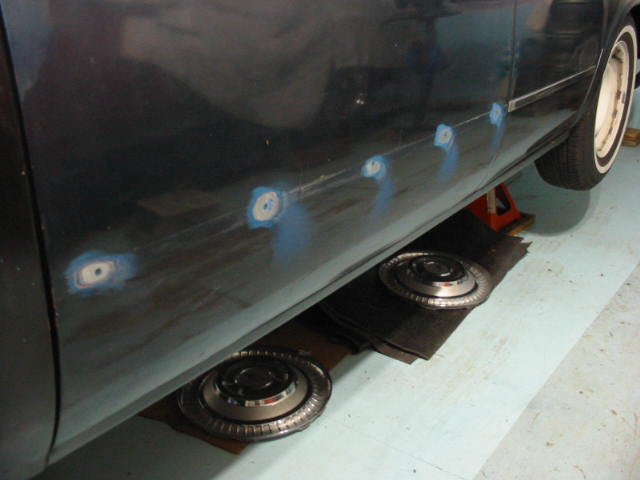
Finally after three coats of primer all the holes are filled in. I’ll add a last primer coat and sand it lightly before trying the glossy black top coats. The red is just a reflection of my jacket.

While waiting for paint to dry on the Chevy and parts to arrive so I can finish the doors I’m cleaning and painting one of the bucket seat frames for the Studebaker. This is one side. I need to finish the other side before I assemble them ready to show to an upholsterer.

Next: more painting and hopefully parts will arrive this week.

Yet more door work

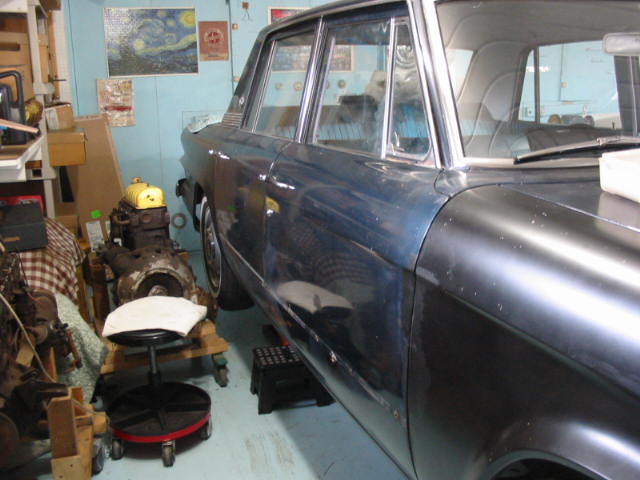
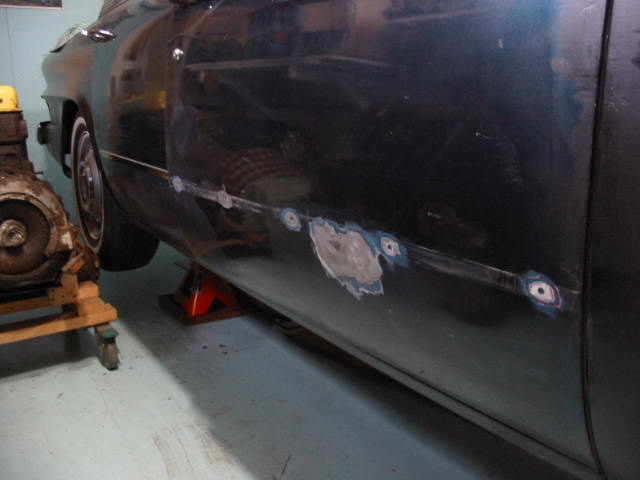
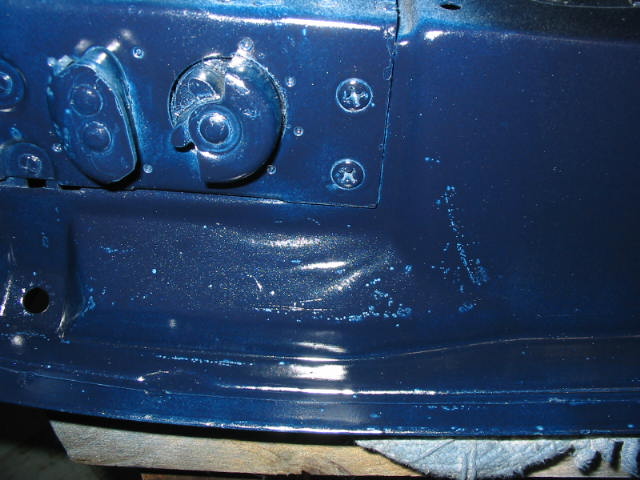
Disaster! The spot putty is lifting the paint. This isn’t the first time it has happened. Earlier I had tried priming the area with a spray bomb and the paint lifted then also. I thought that the filler might keep the paint from lifting, but it is the same problem. I don’t know what paint was used to give the car a quick paint job for sale, but it doesn’t seem to be normal automotive enamel paint.

Each time I give the job a go the area needing paint gets larger! I have sanded off all the old filler and feathered the edges all around.

Not too clear, but I have given the area a coat of Tremclad primer paint using a fine brush. It doesn’t contain the strong solvents used in aerosols. So far so good. I will let it dry completely and then sand off the area around the depressions and then add more primer and repeat until I have a nice smooth surface. The plan is to either brush on a coat of Tremclad gloss black or put some in my hvlp spray gun which would give a smooth finish.

In the meantime I’ll install the left door window runners.

Next: and the doors continue

More and more door work

Passenger side sport mirror installed. Once again not a hard job with a template to locate the mirror holes and the window removed.

The area around the lock is getting bigger. I’ve applied spot putty to fill the depressions as a result of the fibreglass damage.

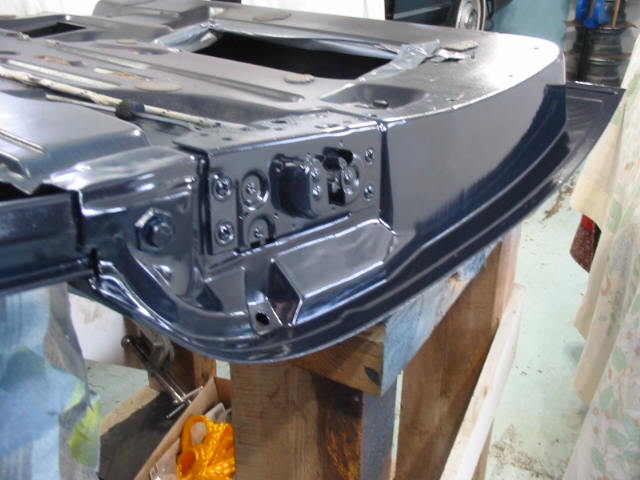
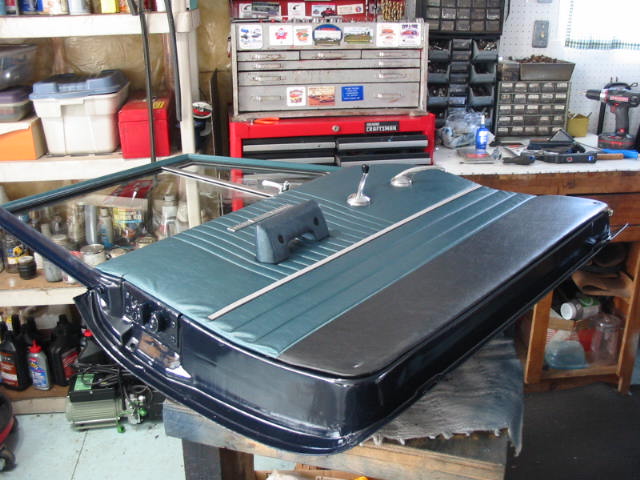
Next job is back on the driver’s door. The top rear lip of the door is scraping by the body pillar and taking the paint off.

The door needs to be shifted forward at the front bottom to increase the gap at the rear top. There is little gap left between the door and the front fender at the bottom so the movement will have to be slight – maybe 1/64″. It’s a long door so a little at the bottom corner will be a lot more at the top corner.

This is the top hinge bolts – two showing and two hidden on the left. I will leave the top inside bolt tight and loosen the other three.

These are the bottom hinge bolts. I have marked the bottom front bolt so that I can judge the movement. I will loosen the other three bolts – two hidden.

Of course when I loosened the lower bolt the door dropped too far. I used this setup to put a bit of upward pressure on the door while I loosened the lower bolt a bit to let the door come back up. The piston that lifts the seat is enough to move the door up without my having to try and lift the door while loosening and tightening the hinge bolt.

After a bit of adjusting I got it to where there is a good gap and the space along the front of the door is still OK.

Next – Yet more door work